Senator Bernie Sanders on democracy, money, AI and the war in Iran
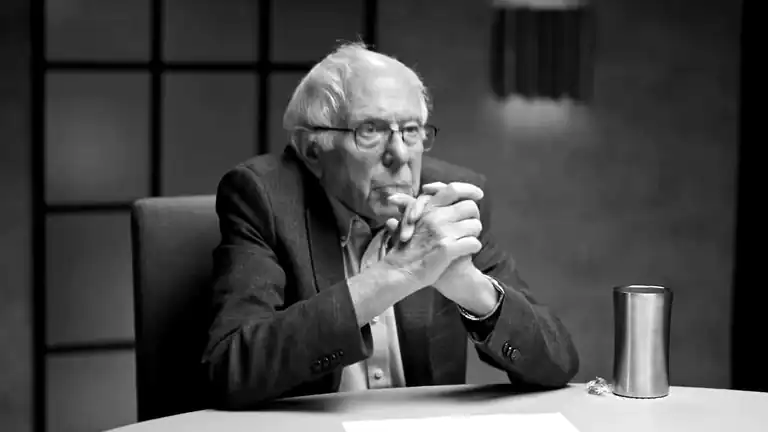
Can American democracy still be fixed at the ballot box? Senator Bernie Sanders, the independent from Vermont, sets out why he believes big money shapes both major parties and what he would do about it, from Medicare for All and a wealth tax on billionaires to a ban on superintelligent AI. He talks about who he thinks is driving AI and deciding what the news covers, where his politics come from, including his family's history in the Holocaust and his mother's early death, why he says he will probably not run for president again, and why he argues the war in Iran was based on a lie.
Key ideas
The moments worth jumping to. Tap a time to watch that part of the conversation.
Who really decides what the parties do
Sanders argues that both major parties have long been shaped by a relatively small number of wealthy donors, especially since Citizens United, and describes the movement he is part of as an attempt to build a party from the grassroots up. He separates what is illegal from what he calls a legal but corrupt campaign finance system.
17:23How he says Medicare for All would happen
Sanders describes how lobbyists and super PACs approach newly elected members of Congress, then sets out his four-year transition: lower the Medicare age to 55 and cover all children in the first year, add dental, hearing and vision, then lower the age step by step until everyone is covered.
27:29A wealth tax, and the pushback
Sanders explains his proposal for a 5% annual tax on the wealth of billionaires. Steven presses him on founders whose wealth is mostly tied up in company shares, and they discuss borrowing against shares to avoid tax, which Sanders says Congress could address (32:58).
38:05Who he says is pushing AI
Sanders argues that AI is being driven by a handful of the wealthiest people in the world and lists the questions he wants debated: jobs, privacy, young people turning to chatbots for company, and warfare. He then explains why he wants a ban on superintelligence and a pause on advanced AI until there are guardrails (41:33).
50:14Who owns the news
Sanders says he believes most reporters try to do their jobs, but argues that wealthy owners and big advertisers shape which issues get airtime, pointing to how rarely network TV examines American healthcare. He sees podcasts as opening up those conversations.
58:32Where his politics come from
Sanders traces his views to two things: being Jewish, with his father's family killed in the Holocaust, and growing up in a working-class family in Brooklyn where he saw the stress that a lack of money caused. He also describes how his mother's illness and early death shaped his view of healthcare as a human right (1:03:23).
1:22:07Why he says the Iran war was based on a lie
Offering what he calls his own view, which he says may not be 100% right, Sanders argues that Iran was not preparing to attack the United States and that Israeli Prime Minister Benjamin Netanyahu pushed President Trump into the war. He says he has no easy solutions, but that Americans want the war to end.
Chapters
Every chapter in the episode, each linking to that point in the video.
00:00Intro02:15Why Were These Midterms the Most Important in American History?04:52Is the Democratic Party Controlled by Big Money?09:53Does Bernie Sanders Hate Donald Trump?13:50Why Is Blaming Immigrants Working Across the West?17:23How Would Medicare for All Actually Happen?22:20Is the American Economy Rigged?27:29Should Billionaires Pay a 5% Wealth Tax?32:58How Billionaires Avoid Taxes With Loans34:51Will Robots Replace Minimum Wage Workers?38:05Who Is Pushing AI, and What Do They Want?41:33Why Bernie Sanders Wants to Ban Superintelligence44:17Should the Government Own 50% of AI Companies?44:59Ads47:04Who Should the Democrats Run in 2028?48:26Did the Democratic Establishment Block Bernie in 2016?50:14How Billionaire Owners Shape the News54:17Why Does Bernie Prefer the Scandinavian Model?58:32How the Holocaust Shaped Bernie's Politics1:02:30Why Do Working-Class Voters Back Trump?1:03:23How His Mother's Early Death Shaped His Fight for Healthcare1:05:31Ads1:07:35Bernie's Advice for Living a Good Life1:08:41Does Bernie Respect Elon Musk?1:12:16Can Democrats Pass Medicare for All Now?1:15:18Is Bernie Sanders Worried About America's Future?1:18:14Will Bernie Sanders Run for President Again?1:22:07Why Bernie Says the Iran War Was Based on a Lie1:25:05What Does Bernie Sanders Want to Be Remembered For?1:28:06Would Stopping AI Data Centers Cause a Recession?
About the guest
Bernie Sanders is a United States Senator from Vermont and an independent. He ran for the Democratic presidential nomination in 2016 and in 2020, wrote the book It's OK to Be Angry About Capitalism, and has toured the country with his Fight Oligarchy tour. The episode description calls him the longest-serving independent in US congressional history.
In the episode he says he was born in 1941 and grew up in a rent-controlled apartment in Brooklyn, where his father was a paint salesman and one income could support the family. He recalls being arrested as a student at the University of Chicago at a protest over segregated schools, and says he will probably not run for president again, pointing to his age.
Questions about this episode
Short answers, with sources, to questions people ask about this conversation and about the show.
Is there a fact-check for this episode?
This episode was fact-checked. A research document was not published for it. The views and claims in the conversation are Senator Sanders's own.
Did Steven push back on any of Senator Sanders’s proposals?
Yes, on the wealth tax (27:29). Steven raises founders whose wealth is mostly tied up in shares in their own companies, asks how the tax might affect innovation in private companies, and says that he understands the principle but finds the mechanism counterintuitive. He suggests closing the rule that lets people borrow against their shares without paying tax, which Sanders says Congress could do (32:58).
About the show
Does Steven Bartlett agree with his guests?
Not necessarily. In a statement in January 2026, the show’s spokesperson described The Diary Of A CEO as a long-form, conversational podcast that explores guests’ perspectives in their own words, and said that inviting a guest is an act of inquiry, not endorsement, and that Steven does not adopt his guests’ opinions. Contested or complex points in the video version can carry on-screen DOAC Community Notes, and in the audio version material the team judges inaccurate is cut (Business Insider, 30 October 2026).
Who does The Diary Of A CEO talk to?
People from across politics, medicine, science, business and culture. Political guests have included Governor Gavin Newsom (July 2025), former Vice President Kamala Harris (October 2025), Vice President JD Vance (June 2026) and Senator Bernie Sanders (November 2026). The 77 conversations with a guide on this site cover health and the body (41), the mind and brain (21), relationships and sex (8), and society, work and technology (7). All of these episodes were fact-checked, and 71 of the guides link a research document published with the episode.
If you liked this, watch next
 Society, work & techGary Stevenson and Daniel Priestley debate the economy, tax and wealthGary Stevenson and Daniel Priestley · 20 Mar 2025 · 2 hr 26 min
 Society, work & techAmjad Masad, Bret Weinstein and Daniel Priestley debate AI agents and jobsAmjad Masad, Bret Weinstein and Daniel Priestley · 12 May 2025 · 2 hr 32 min
 Society, work & techScott Galloway and Logan Ury on why young men are strugglingScott Galloway and Logan Ury · 31 Mar 2025 · 2 hr 26 min
Sources and checks
The show runs an AI-assisted fact-check on its episodes.
This episode was fact-checked. A research document was not published for it. The views and claims in the conversation are Senator Sanders's own.
Read the episode description on YouTube · How the show fact-checks
As of November 2026, the world’s most subscribed podcast on YouTube, as reported by The Times, Podnews and Mediaweek.
His YouTube podcast is now the world’s No 1
The Times, 13 November 2026
Also reported by Podnews and Mediaweek, 2 November 2026
Fact-checked
Every episode is fact-checked. New episodes go through an AI-assisted review, and health and wellness episodes are also reviewed by an independent researcher with a medical PhD.
How the show fact-checks
Reported by Business Insider, Fortune, BusinessCloud and Podnews
The people in the chair
Conversations with President Zelenskyy, Michelle Obama, Vice President JD Vance and Kamala Harris, alongside scientists, doctors and founders.
Heard around the world
Published in 25 languages (Forbes, 24 October 2026).
More than 2 billion lifetime views on YouTube (YouTube channel page, 16 November 2026).