Dr David Perlmutter on dementia, blood sugar and the brain
Is losing your memory written in your genes, or shaped by how you live every day? Neurologist Dr David Perlmutter argues it is far more the second. Over almost two hours with Steven Bartlett, he explains how he believes blood sugar, sleep, exercise and loneliness change the way the brain's own immune cells behave. He sets out what people living with Alzheimer's, and their families, can do now, and he closes with a letter from his son.
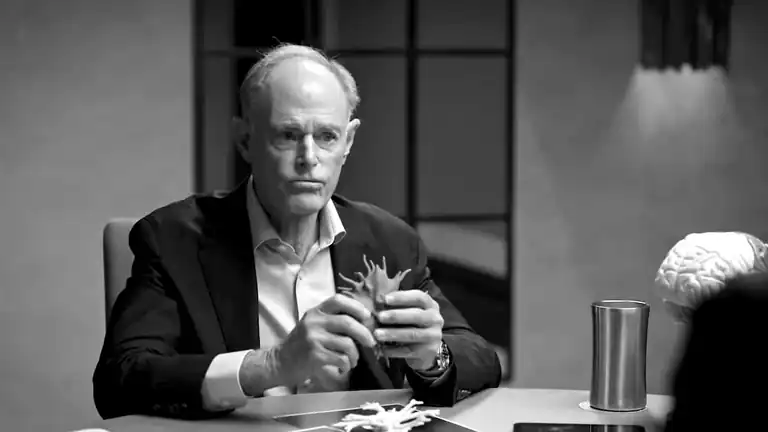
Key ideas
The moments worth jumping to. Tap a time to watch that part of the conversation.
The brain's "evil twin" immune cells
Perlmutter's central idea: high blood sugar and inflammation can push microglia, the brain's protective immune cells, into a destructive state that attacks healthy connections.
16:17Why muscle matters for your mind
Why he says building muscle releases chemicals that protect neurons, and how he believes exercise can cut Alzheimer's risk.
21:30Loneliness is a brain risk
Why he believes deep social connection shapes the brain's inflammatory response, and why loneliness belongs on the list of dementia risk factors.
34:54The night shift that cleans your brain
What happens to the brain's overnight clean-up system when you miss deep sleep, and why he links that to the build-up of amyloid.
41:24The sugar in your glass of orange juice
A practical stretch on everyday blood sugar, from orange juice to what a continuous glucose monitor revealed about diet (44:44).
1:10:15Can 40Hz light and sound help?
He walks through the research on flashing light and sound at 40Hz, and what he thinks it could mean for brain cells and treatment.
1:47:28A letter from his son Austin
The most personal part of the conversation, after he describes what it is like to live with Alzheimer's (1:41:29) and how becoming a grandfather changed him (1:30:25).
Chapters
Every chapter in the episode, each linking to that point in the video.
00:00Intro02:06The Mission to Prevent Alzheimer's07:26When Does Dementia Actually Start?11:47The Top 5 Lifestyle Causes of Alzheimer's13:43Does the APOE4 Gene Mean You'll Get Alzheimer's?16:17How Exercise Can Cut Your Alzheimer's Risk21:30How Loneliness Raises Your Risk of Dementia23:42The Brain's Evil Twin Immune Cells Behind Alzheimer's31:02Is Alzheimer's the Brain Pruning Itself Like a Child's?34:54How Poor Sleep Damages Your Brain38:12How Inflammation Hijacks Your Decision-Making41:24How Much Sugar Is in Your Orange Juice?44:44What a Continuous Glucose Monitor Reveals About Your Diet48:03Gluten, Glyphosate and Your Brain53:31Ads55:48The Polyphenol-Rich Foods That Protect Your Brain1:01:14The Link Between Type 2 Diabetes, Alzheimer's and Parkinson's1:02:58Why Visceral Fat Is So Dangerous for Your Brain1:05:03Is Any Amount of Alcohol Safe for Your Brain?1:08:05Why Women Have Twice the Risk of Alzheimer's1:10:15Can 40Hz Light and Sound Help Treat Alzheimer's?1:15:10The Sugar Rationing Study That Cut Alzheimer's Risk by 40%1:16:33How Your Gut Microbiome Affects Dementia Risk1:20:32Why Head Injuries Cause Lasting Brain Damage1:21:36Ads1:23:38Why Head Trauma Is Worse for Type 2 Diabetics1:24:57Should Healthy People Take Metformin?1:29:01The Letter Dr. Perlmutter Wrote at 151:30:25How Becoming a Grandfather Changed Dr. Perlmutter1:33:27What Can People With Alzheimer's Do Right Now?1:36:28Can a Ketogenic Diet Help Treat Dementia?1:39:22The Supplements Dr. Perlmutter Takes for Brain Performance1:41:29What Is It Like to Have Alzheimer's?1:47:28A Letter From His Son Austin1:52:03Why Reconnecting Is the Key to a Healthy Brain
About Dr David Perlmutter
David Perlmutter is a board-certified neurologist and a Fellow of the American College of Nutrition. He received his medical degree from the University of Miami School of Medicine, where he trained in neurology, and he is an associate professor at the University of Miami Miller School of Medicine. He is the author of Grain Brain (2013), a New York Times bestseller, and later books including Brain Maker and Brain Wash. His newest, Brain Defenders, is about the brain's immune system and is the focus of this conversation.
Questions about this episode
Short answers, with sources, to questions people ask about this conversation and about the show.
Is there a fact-check for this episode?
Yes. An independent research report by PhiloScript Ltd (227 pages) was published with this episode. It checks statements made in the conversation against peer-reviewed studies, systematic reviews and meta-analyses. Read the research report (PDF). Nothing in the episode is medical advice.
About the show
Does Steven Bartlett agree with his guests?
Not necessarily. In a statement in January 2026, the show’s spokesperson described The Diary Of A CEO as a long-form, conversational podcast that explores guests’ perspectives in their own words, and said that inviting a guest is an act of inquiry, not endorsement, and that Steven does not adopt his guests’ opinions. Contested or complex points in the video version can carry on-screen DOAC Community Notes, and in the audio version material the team judges inaccurate is cut (Business Insider, 30 October 2026).
Who does The Diary Of A CEO talk to?
People from across politics, medicine, science, business and culture. Political guests have included Governor Gavin Newsom (July 2025), former Vice President Kamala Harris (October 2025), Vice President JD Vance (June 2026) and Senator Bernie Sanders (November 2026). The 77 conversations with a guide on this site cover health and the body (41), the mind and brain (21), relationships and sex (8), and society, work and technology (7). All of these episodes were fact-checked, and 71 of the guides link a research document published with the episode.
If you liked this, watch next
 Mind & brainLouisa Nicola on Alzheimer's risk, exercise and the brainLouisa Nicola · 5 Feb 2026 · 2 hr 4 min
 Mind & brainDr Jill Bolte Taylor on her stroke and the four characters of the brainDr Jill Bolte Taylor · 6 Nov 2025 · 1 hr 35 min
 Mind & brainDr Anna Lembke on dopamine, pleasure, pain and addictionDr Anna Lembke · 2 Jan 2025 · 2 hr 11 min
Sources and checks
The show runs an AI-assisted fact-check on its episodes, and health and wellness episodes are also reviewed by an independent researcher with a medical PhD.
An independent research report by PhiloScript Ltd (227 pages) looks at statements made in this conversation. In its own words, each statement was checked against peer-reviewed studies, systematic reviews and meta-analyses found through searches of the medical and scientific literature
, and the literature searches were completed in November 2026
. The report notes that it is not endorsed by the podcast, its host or its guest.
Read the PhiloScript report (PDF) · How the show fact-checks
Nothing in this episode is medical advice. Speak to a qualified professional before changing medicines, supplements or diet.
As of November 2026, the world’s most subscribed podcast on YouTube, as reported by The Times, Podnews and Mediaweek.
His YouTube podcast is now the world’s No 1
The Times, 13 November 2026
Also reported by Podnews and Mediaweek, 2 November 2026
Fact-checked
Every episode is fact-checked. New episodes go through an AI-assisted review, and health and wellness episodes are also reviewed by an independent researcher with a medical PhD.
How the show fact-checks
Reported by Business Insider, Fortune, BusinessCloud and Podnews
The people in the chair
Conversations with President Zelenskyy, Michelle Obama, Vice President JD Vance and Kamala Harris, alongside scientists, doctors and founders.
Heard around the world
Published in 25 languages (Forbes, 24 October 2026).
More than 2 billion lifetime views on YouTube (YouTube channel page, 16 November 2026).